Traditional project management often emphasizes rigid planning and sequential execution. This approach, while offering control, frequently struggles with unforeseen challenges or evolving requirements. Early phases focus heavily on defining scope, sometimes overlooking innovation's dynamic nature. The initial blueprint, though meticulously crafted, can become a straitjacket, hindering genuine progress and adaptation.
Historical methodologies treated projects as fixed entities, where deviations from the original plan were seen as failures. This perspective stifled creativity and discouraged experimentation, leading to solutions that were technically sound but not always optimized for user needs or market shifts. The emphasis was on adherence to plan, not on discovery, limiting true potential.
However, modern understanding highlights the crucial role of continuous learning. Research into successful ventures consistently points to their ability to pivot, refine, and evolve based on feedback and new insights. This shift recognizes that the journey from an initial idea to a successful outcome is rarely a straight line. It's an iterative process, demanding an open mind and a willingness to question assumptions.
The literature increasingly suggests a project's resilience and ultimate success are tied to its capacity for internalizing new information and adapting its trajectory. This involves more than reacting to problems; it's about proactively seeking learning moments and integrating them into the core development cycle. Cultivating this learning mindset is paramount for navigating complexity and achieving impactful results.
Key Observations from the Field
- Projects integrating early and frequent feedback loops significantly outperform those relying solely on end-stage validation. This proactive engagement reduces costly rework.
- A culture of psychological safety, where experimentation and "failure" are reframed as learning opportunities, directly correlates with higher innovation rates and team morale.
- The most effective project teams prioritize continuous skill development and knowledge sharing, ensuring insights gained by one member benefit the entire collective.
Navigating Complexity: Analysis and Interpretation
The transition from a fixed plan to a flexible, learning-oriented approach isn't without challenges. It requires a fundamental shift in organizational culture and individual mindset. Leaders must champion curiosity and provide resources for exploration, fostering an environment where growth is valued above rigid adherence.
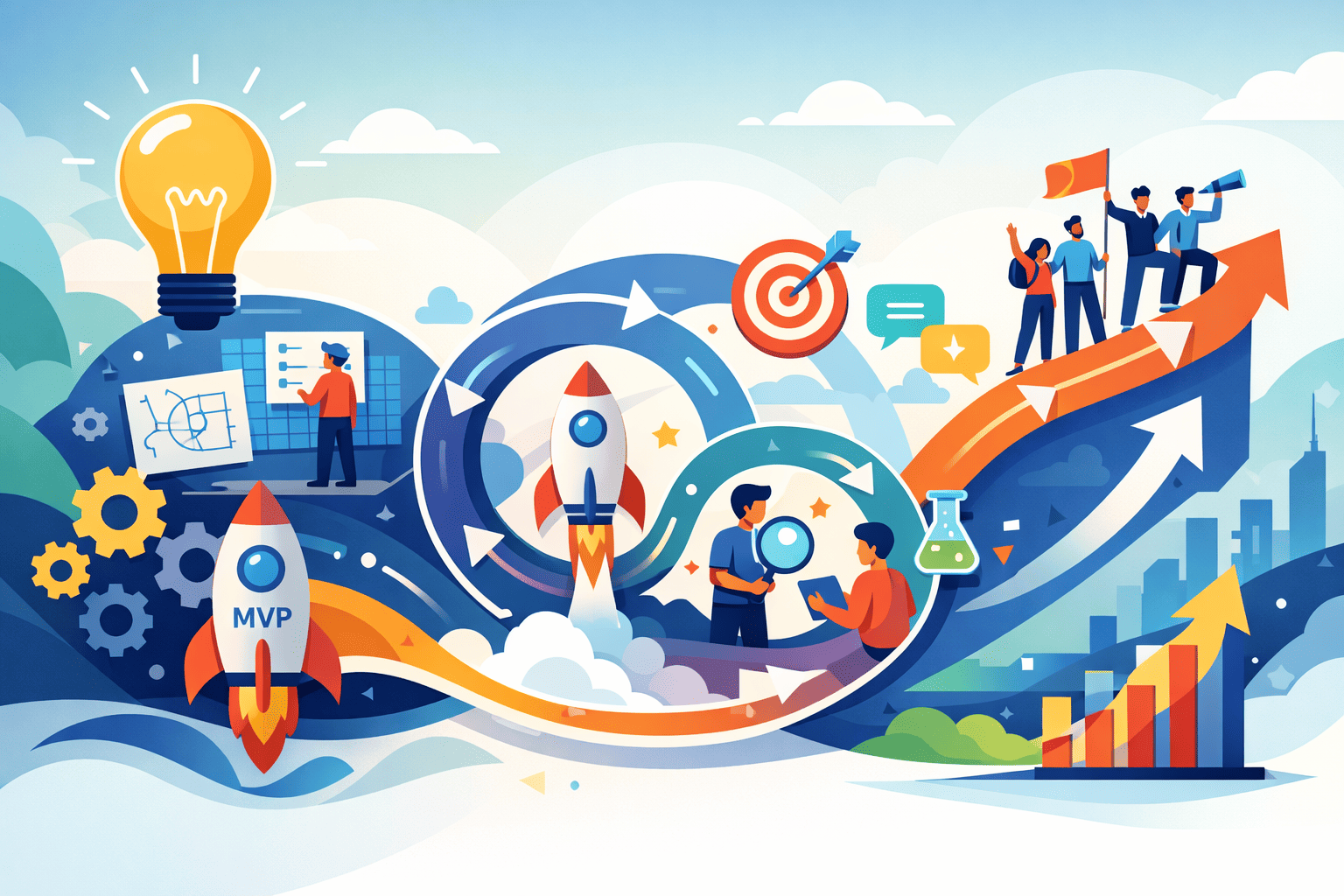
One critical aspect is the concept of "minimum viable products" (MVPs). These aren't just simplified versions; they are carefully designed experiments intended to gather maximum validated learning with minimal effort. Their purpose is to test hypotheses rapidly, providing concrete data to inform subsequent iterations.
Interpreting feedback effectively is another nuanced skill. It's not about blindly implementing every suggestion, but rather discerning underlying needs and patterns. This requires critical thinking and a deep understanding of the project's core objectives. Often, valuable insights come from observing user behavior.
The iterative cycle inherently involves embracing uncertainty. Rather than eliminating all risks upfront, a learning mindset encourages identifying key assumptions and designing small, controlled experiments to validate or invalidate them. This proactive risk management through learning is more effective than exhaustive initial planning.
A common pitfall is mistaking iteration for endless tinkering without direction. True iteration is purposeful, driven by clear learning goals and measurable outcomes. Each cycle should bring the project closer to its ultimate vision, even if that vision evolves. Discipline in learning and strategic planning is crucial.
The cultivation of a learning mindset also extends to the tools and processes employed. Agile methodologies, for instance, are not just practices but embody a philosophy centered on adaptation, collaboration, and continuous improvement. They provide frameworks that naturally support an iterative approach, making learning intrinsic to the workflow of TinkerDraft Journal.
Actionable Insights and Future Directions
- Implement structured retrospectives after each project phase to systematically capture lessons learned and integrate them into future planning, fostering continuous improvement.
- Encourage cross-functional teams to engage in regular knowledge-sharing sessions, ensuring insights from diverse perspectives enrich collective understanding and problem-solving.
- Design projects with explicit "learning objectives" alongside delivery objectives, dedicating resources to validate key assumptions early and adapt strategies accordingly.

Comments